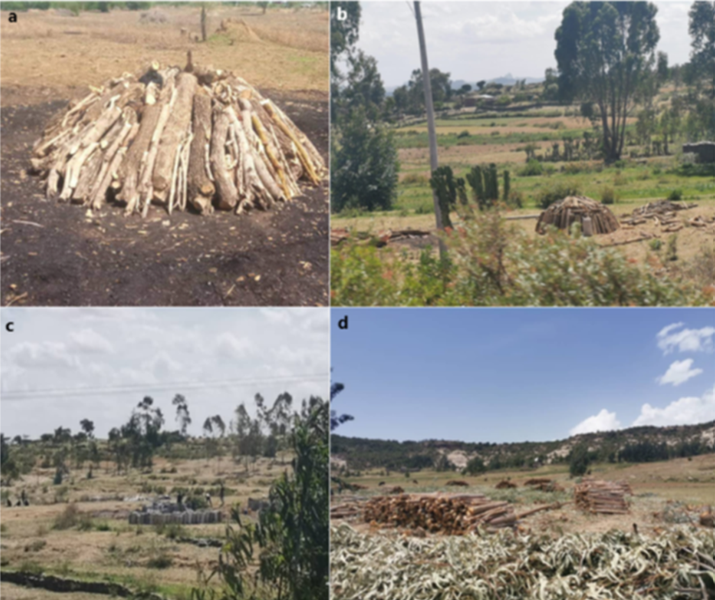
The Tigray war, broke-out on November 4, 2020, systematically reversing decades of forest rehabilitation and conservation achievements through a coordinated campaign of logging, burning, and resource theft that significantly affected the socio-economy and ecology of the region. An assessment of war and siege-induced damage and loss in Tigray revealed 88.3% prevalence of damage on forest resources, resulting in the damage of 53% of the forest area in the region. The war and siege led to widespread deforestation in the region due to military operations, artillery strikes, looting, increased firewood consumption and charcoal production, disruption of forest management activities, and lack of surveillance and protection of forest resources. The damage and loss of forest and tree species have implications for the environment and the livelihood of the local communities, resulting in a shortage of bee forage, biodiversity loss, a shortage of income, and environmental effects. The interruption of electricity during the war forced a shift of the primary source of energy from electricity to fuelwood and charcoal. This aggravates deforestation that contributes to climate change by releasing carbon dioxide into the atmosphere, reducing the ability of forests to absorb greenhouse gases, and altering regional weather patterns. The loss of forests also disrupts ecosystems and accelerates the extinction of plant and animal species. The damage across all types of forest resources amounts to an extensive ecosystem service loss of approximately US$37.5 billion over the past 5 years, since the start of the war, while it is known that it has long-term impacts. Hence, immediate action to stop ongoing deforestation and further rehabilitation efforts to recover the damage in the region and rebuild the forest sector through reforestation, rehabilitation of degraded areas, and implementing sustainable forest management practices is required.
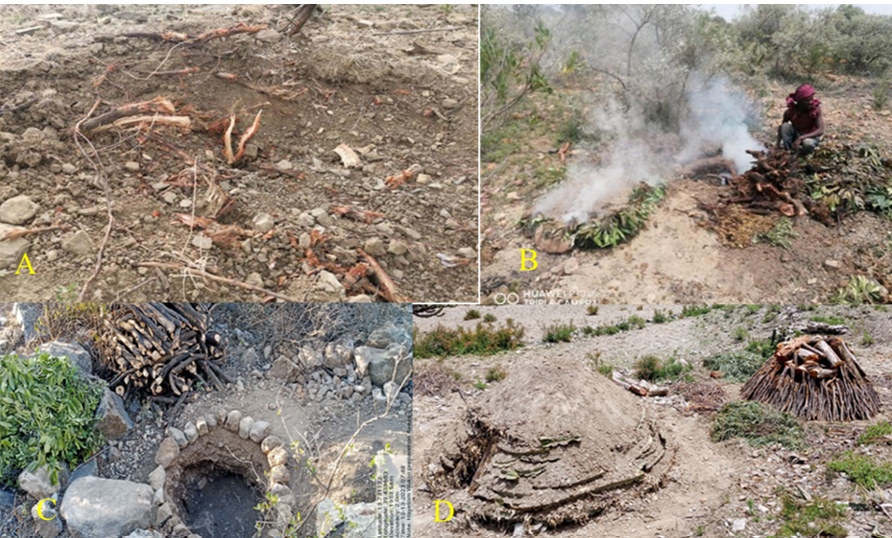
Figure Cutting and uprooting trees, and charcoal production as means of household income
Note: Togoga (A and B), Nealet (C), and Hayelom (D) Tabyas
Source: CITG, 2023
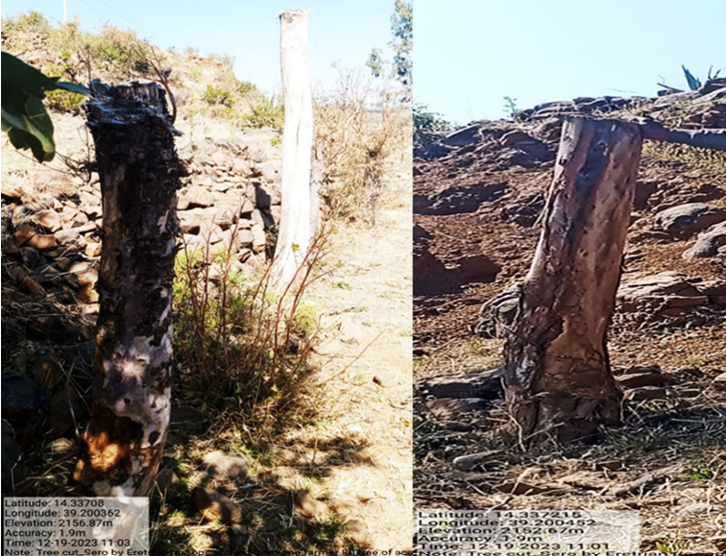
Figure Eucalyptus trees that has been cut off at a height of more than 1.5m by the Eritrean forces Source: CITG, 2022
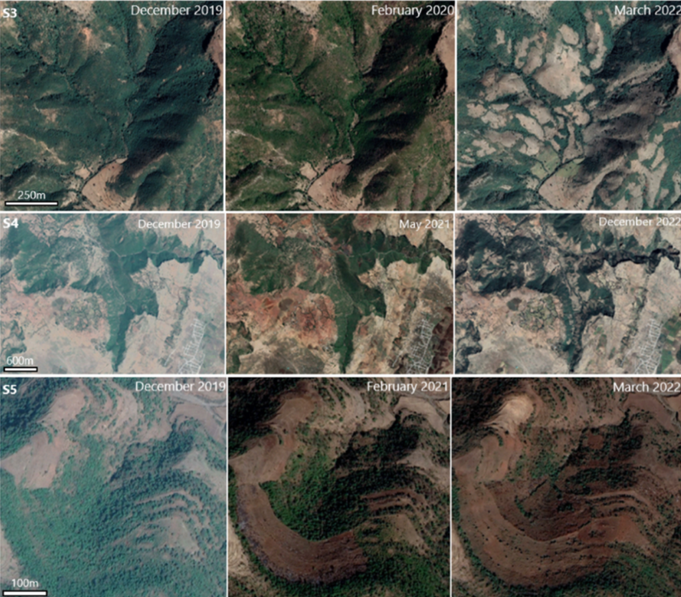
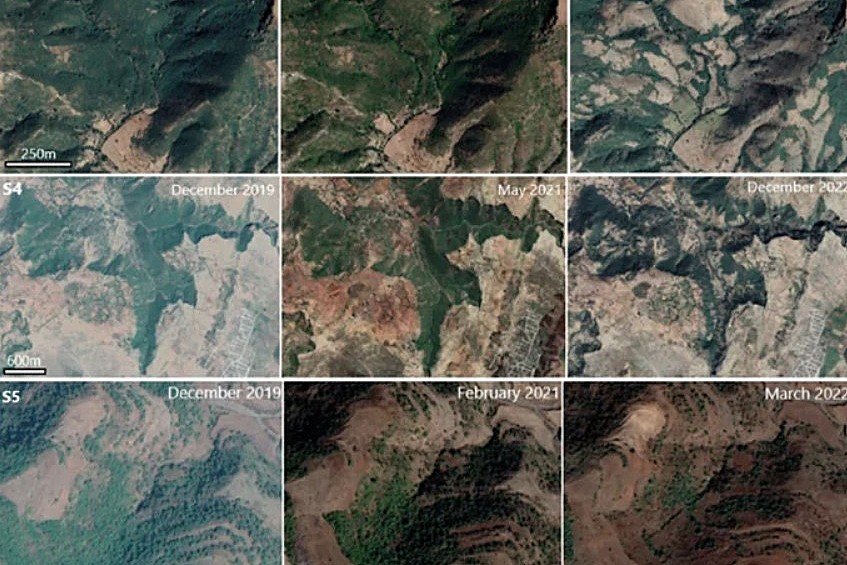
Figure: Continuous decline of woody vegetation cover around Shire due to the overpopulation exacerbated by the enormous internally displaced persons (IDPs) from western Tigray
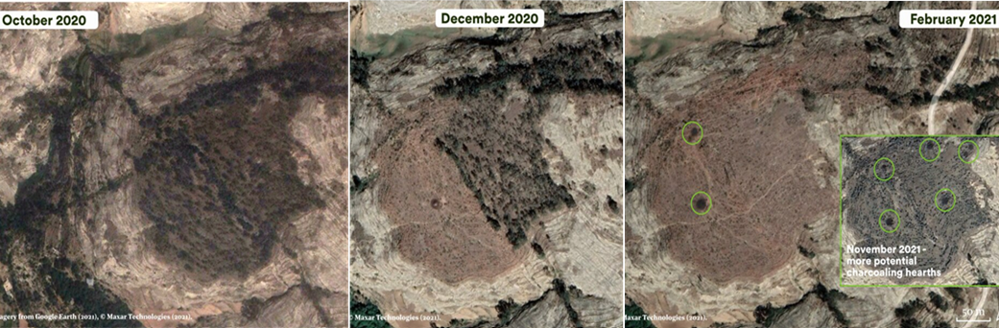
Figure Woody vegetation cover before and after Tigray war broke out in October 2020: clearing and subsequent charcoaling during the course of the conflict