Helen (not her real name) is a 38-year-old woman originally from Tabya Wuhdet in Qafta Humera. Her life changed forever in November 2020 when the Tigray war forced her family to flee. She describes the harrowing night they left:
The Amhara soldiers came in, and we had to leave. It was night, and we didn’t even have time to take our belongings. They told us they were there, and we never looked back. I left behind my jewelry and my crops. I fled with my husband, our five children, and my two disabled siblings.”
The family initially sought refuge with Helen’s in-laws in a rural area, but the violence followed them. After her mother-in-law was killed inside her own home by Fano militias, the family fled again to May-Tsebri. With her husband away serving in the TDF, Helen found herself alone and destitute. For a year, she and her children stayed with distant relatives, but when they began demanding rent that she could not afford, she was forced to move to Endabaguna. In Endabaguna, the struggle for survival became even more desperate. Helen began collecting and selling firewood to feed her children, often facing hostility from local residents who accused the displaced of ruining the land and frequently confiscated her wood.
Nobody would take pity on us. I would collect firewood to survive, but now my knees are injured. The burden has fallen on my eldest daughter; she carries the weight of feeding us all by begging everywhere. I even had to ask my disabled siblings to go out and live on their own because I could not support them. I cannot send my children away, but I feel such misery.
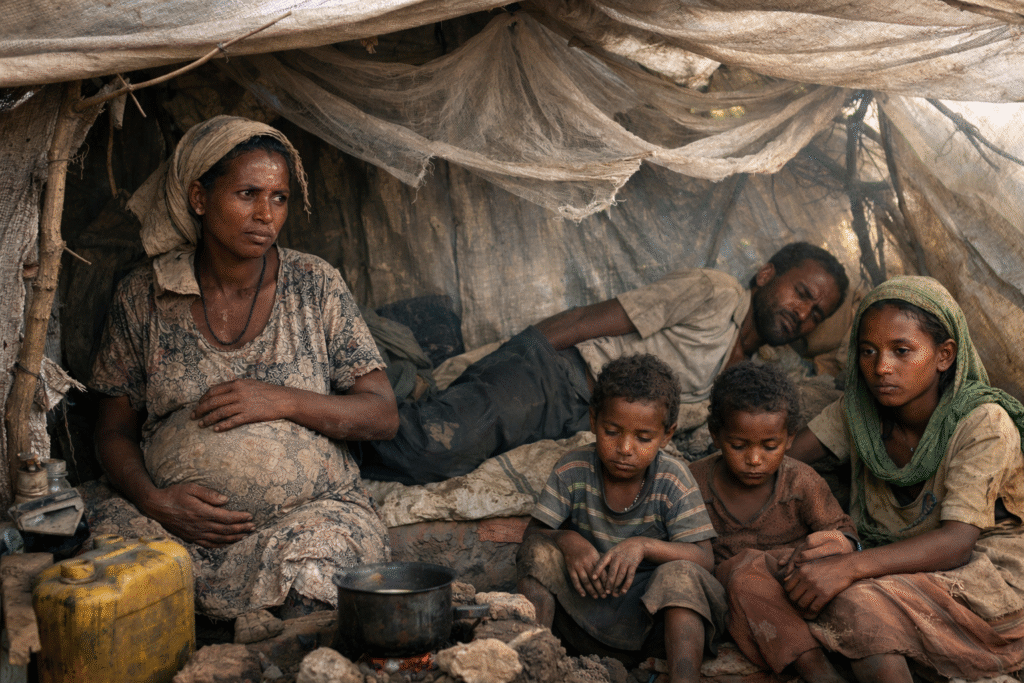
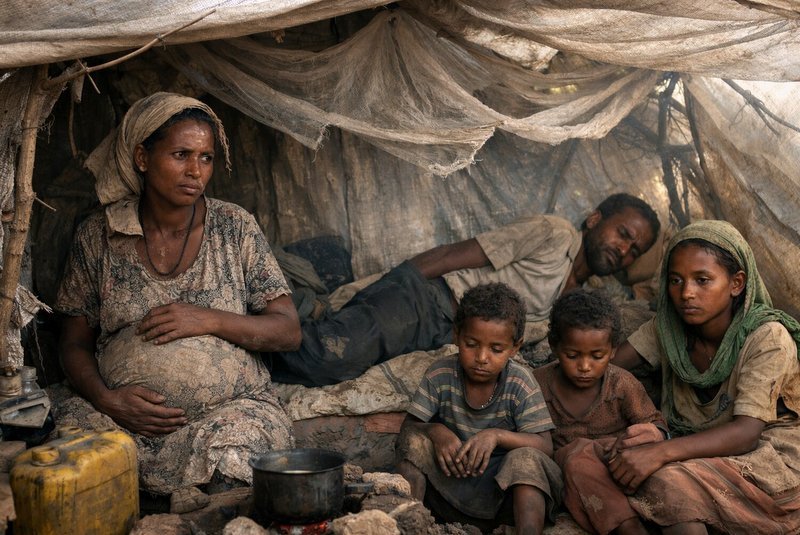
The family was eventually relocated to May-Dmu, but the humanitarian aid they were promised has been inconsistent and exclusionary. Although NGOs took their fingerprints in Endabaguna, they were later told they were ineligible for aid because they lived outside the formal IDP camp. While they received 9,000 Birr for three months starting in October, all payments have since ceased. Helen is now five months pregnant and living in a shelter made of a single plastic sheet. Her husband, having returned from the war with a severe back injury, is unable to perform physical labor or even carry water.
You can see my shelter; I sleep on a bed I have made from mud and stones, barely covered by a mosquito net. My husband is in constant pain, and I am sick often. During the day, the sun burns us through the plastic. My children are registered for school, but they refuse to go, asking how they can study when they have nothing to eat.
Back in Qafta Humera, Helen’s family were successful farmers, harvesting sesame and barley. Today, she faces the prospect of giving birth in a state of extreme malnutrition and mental stress. “I am scared for my life. I need food and bedding. My hips hurt from sleeping on the ground. When I think of giving birth, I know I need nutrition that I simply do not have. I am living through hope alone, but we need help immediately.”
For the details, see the full report: https://citghub.org/the-plight-of-internally-displaced-persons-in-tigray-a-special-assessment-report/