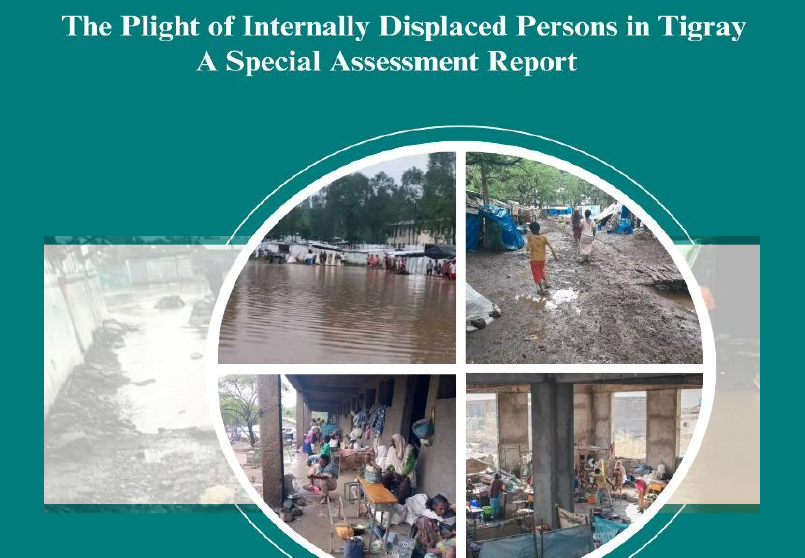
On September 24, 2025, the Commission of Inquiry on Tigray Genocide released a special report documenting the plight of internally displaced persons (IDPs) sheltered across 92 sites in Tigray. Among the many voices featured were Helen and Maryamawit (pseudonyms), whose stories underscore severe challenges: their pregnancies and births significantly compounded their existing hardships.
Helen, an IDP at the May-Dmu site in Shire, was displaced from Qafta Humera in Western Tigray. She now lives in a plastic tent with her war-disabled husband and five children. Despite being five months pregnant, Helen has been repeatedly denied nutritious and supplemental food aid. She shared her fear about the upcoming birth, stating, “When I think of giving birth, I get scared.” She desperately needs money, nutritious food, and bedding, explaining the physical toll: “I am scared for my life as I have nothing. And since I sleep on a bed I have made from mud, my hips hurt, my legs hurt.” Helen also grapples with immense mental stress and worry, often feeling too sick to leave her shelter. She recounted never receiving nutritious food aid, nor medical checkups or treatment beyond a single NGO vaccination, a deprivation also experienced by her five children. Her attempts to register for aid are consistently ignored. “They always pass me,” she lamented, adding with a sense of resignation, “I never even speak a word to anyone anymore.”
In a separate and equally heartbreaking case, Maryamawit, an unaccompanied and separated girl, was just 15 when she gave birth to a son in the Endabaguna IDP site. The 20-year-old father offered no support, leaving Maryamawit overwhelmed and utterly alone. She contemplated abortion but ultimately chose against it, trusting in fate. “God knows,” she told herself. With no family to rely on, she depended solely on a few loyal friends. Her displaced mother was a struggling day worker in MayTsebri, and Maryamawit herself had no income. Fellow IDPs provided bread, accompanied her to the clinic during labor, and helped raise funds after the birth. Her only possession, her phone, was even pawned to cover expenses when her son was born. Maryamawit endures each day under the constant shadow of hunger. “There are many days I go to sleep without eating anything,” she shared.
IDPs participating in the study reported facing starvation since their initial displacement. Alarmingly, they assert that starvation continued even after the Pretoria peace agreement, leading to numerous deaths.
To read the full report, visit the Commission’s Website on “The Plight of Internally Displaced Persons in Tigray: A Special Assessment Report”https://citghub.org/the-plight-of-internally-displaced-persons-in-tigray-a-special-assessment-report/