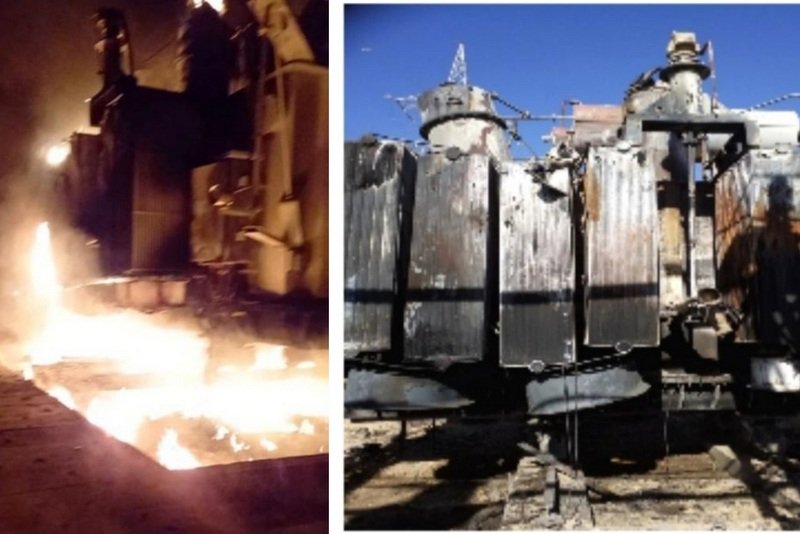
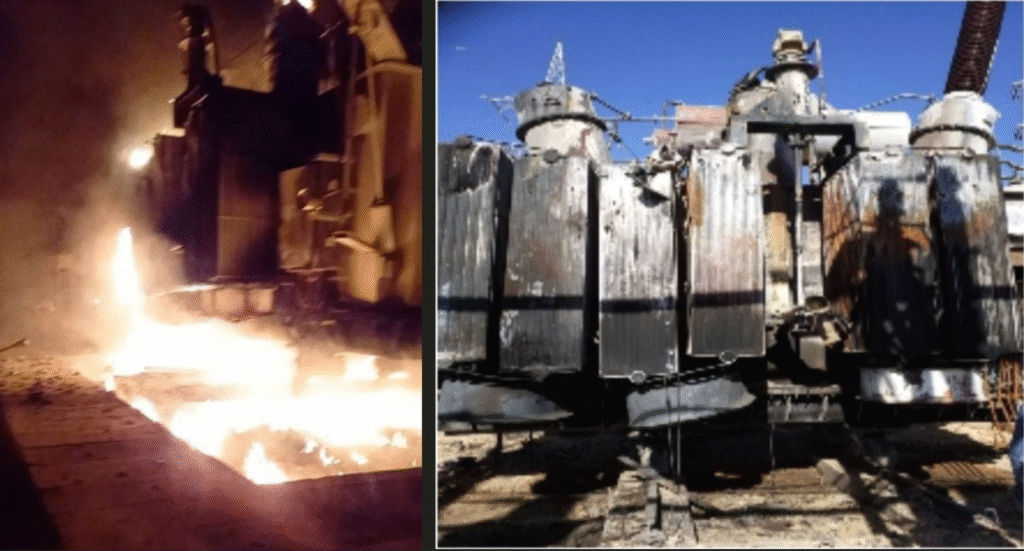
Tekeze Substation Engulfed in Flames following Drone Strike
Tekeze Hydropower is a critical energy infrastructure project in Ethiopia, located on the Tekeze River in the Tigray region. It features a 188-meter double-curvature arch dam—one of the tallest in Africa, with a reservoir capacity of 9.3 billion cubic meters and a total installed capacity of 300 MW, generated through four 75 MW turbines. Before the war on Tigray disrupted operations, only one unit was functional, producing 60 MW of electricity, far below its potential annual output of 981 GWh. The power generated is integrated into Ethiopia’s national grid through the Lachi substation in Mekelle, with additional high-voltage lines supplying Axum and Shire Endasillasie. As Tigray’s largest hydropower plant, Tekeze plays a vital role in regional and national energy supply, supporting economic growth and infrastructure development.
The Tekeze hydropower substation, a critical node in the national grid, was systematically targeted in a series of aerial attacks by the Ethiopian National Defense Forces (ENDF) between 2020 and 2021. The facility was destroyed by warplanes and drone attacks, an act that turned public infrastructure into a military target. The drone assault by the Ethiopian National Defense Force caused catastrophic damage to the plant’s core components. The attacks deliberately targeted and destroyed high-value assets, including 25MW power transformers, transmission lines, and control systems, leading to a permanent power disconnection.
The systematic destruction of Tigray’s energy infrastructure by the Ethiopian National Defense Force during the two-year war did more than disable power lines and substations; it triggered a catastrophic collapse of the region’s entire socio-economic and environmental system. The failure of the electrical grid acted as a primary shock, from which cascading failures radiated outwards, paralyzing every pillar of modern society.
This profound and often disproportionate consequences of this engineered darkness, examining how the loss of power weaponized public health, dismantled education and industry, the heightened vulnerability of women and children, and the acceleration of environmental degradation, forced communities to rely entirely on firewood, triggering severe deforestation as trees were cut down for cooking, heating, and lighting. The shift to wood-burning stoves and open fires accelerated forest loss and degraded ecosystems.
For the details, see the full report,from page 80: https://citghub.org/targeted-destruction-damage-and-loss-assessment-on-tigrays-public-infrastructure-sector/