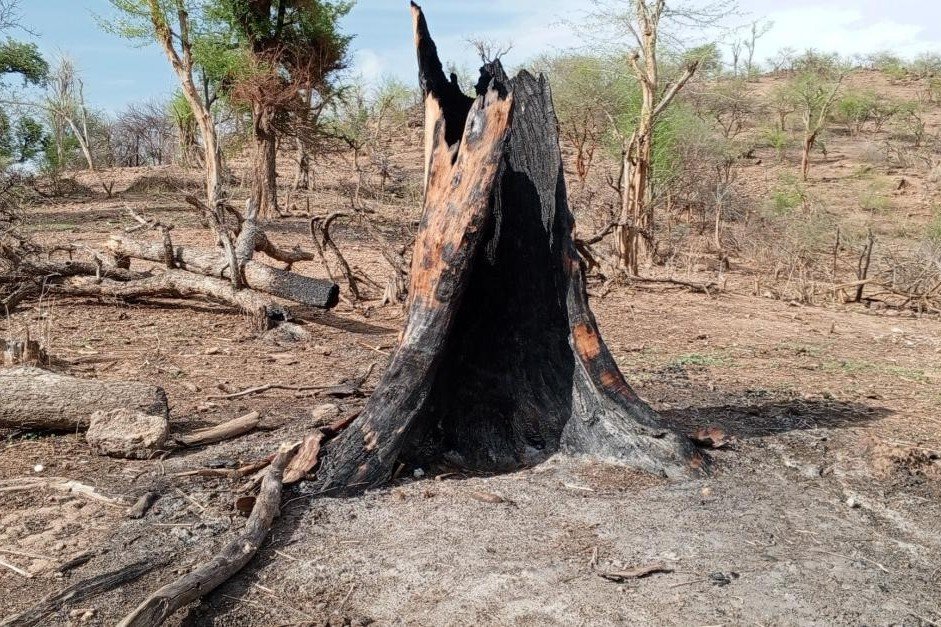
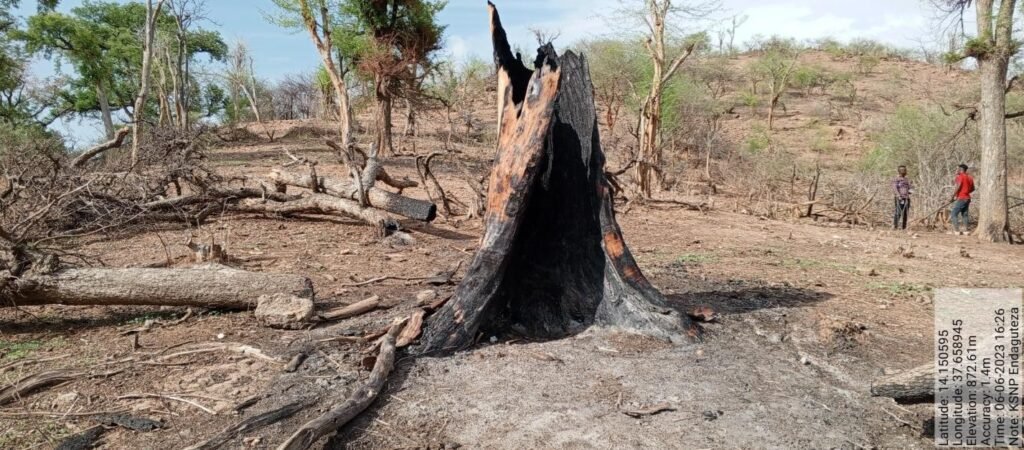
For thirty years, the people of Tigray transformed marginal lands into thriving habitats for various wildlife species, a labor of achievements that enabled the people and government of Tigray to earn, beyond the local milestones that have been recorded, the 2017 Global Gold Award for land restoration. In many places of Tigray, wildlife species like leopard and African grassland elephants in Kafta Sheraro National Park (KSNP) once roamed freely. But in November 2020, this legacy was shattered by a devastating war.
The regional scouts, who had spent decades protecting these lands, watched as conservation institutions collapsed. The damage was not merely a byproduct of battle; it was characterized by a “third pathway” of ethnic labeled destruction. Respondents noted that perpetrators from the Eritrean Defense Force (92%), Ethiopian National Defense Forces (73.9%), and Amhara forces (27.7%) deliberately targeted wildlife and their habitats as the property of the Tigrayan people.
The tragedy was partly measurable. The total estimated damage of local extinctions to both medium and large mammals, as well as conservation concern bird a staggering US$4.44 billion. The damage estimated to medium and large mammals accounting was about US$3.26 billion, and conservation-concern birds over US$1.18 billion.
As forests fell to shellfire and habitat destruction, the delicate balance between man and nature broke. With wild prey locally extinct, human-wildlife conflict escalated. In a chilling behavioral shift, carnivores like hyenas and leopards, having scavenged on battlefield casualties and civilians died during the war, began attacking the living. War and siege induced denial electricity power have induced significant damage to the wildlife habitats. Meanwhile, 2.1 million internally displaced persons (IDPs) without an electricity supply have been forced to harvest firewood for survival, further fragmenting vital wildlife corridors.
The once-vibrant ecotourism potential of the landscapes, mammals, rare flora, and endemic birds was decimated, with 73% of respondents noting its demise due to instability and physical destruction. Today, major wildlife habitats of KSNP, Hirmi, Wujig Mahgo Waren, Dessa, Tsaedat, Asimba, and Waldba stand scarred.
The war in Tigray has caused a profound and dangerous behavioral adaptation in hyena populations due to their frequent scavenging on human remains. Under normal circumstances, hyenas are relatively less likely to attack humans; however, the prevalence of human casualties on battlefields has altered this dynamic.
To conclude, the war impact is devastating to wildlife conservation; without urgent restoration of conservation institutions and habitats, Tigray’s diverse and unique wildlife may face permanent extinction in the regional state.
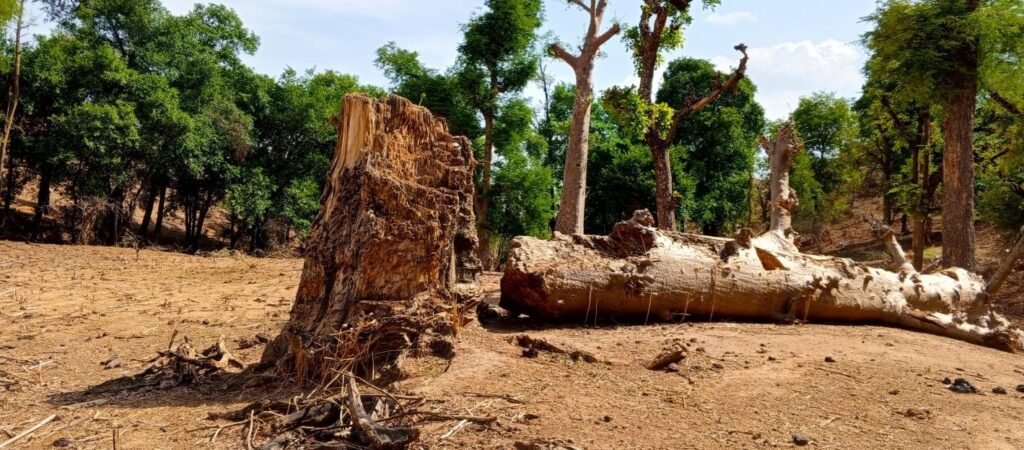
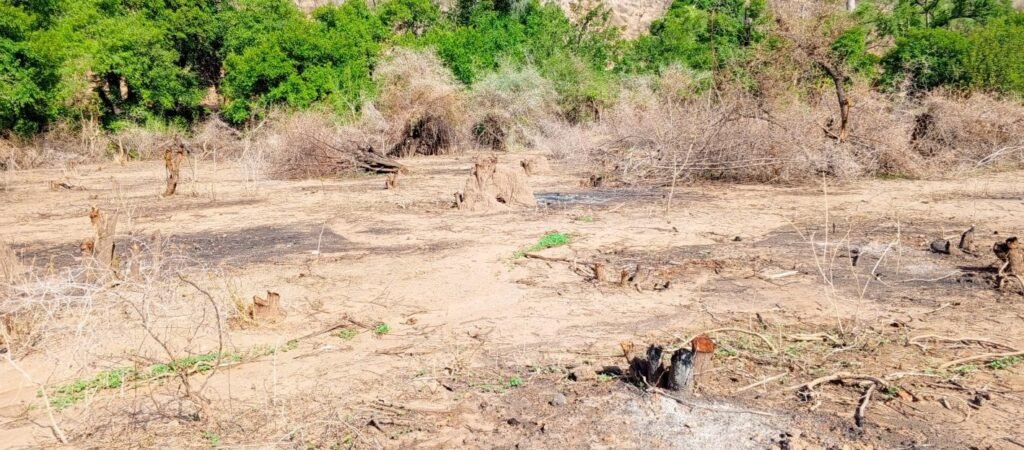
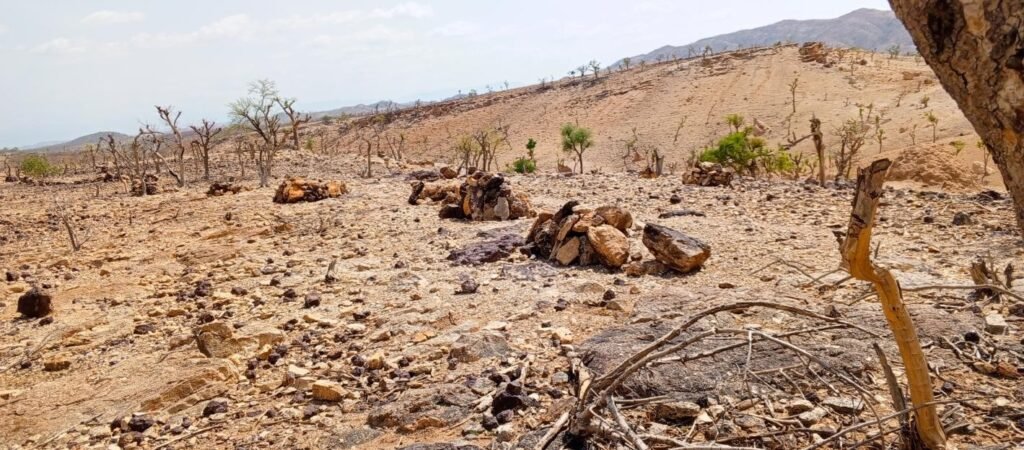
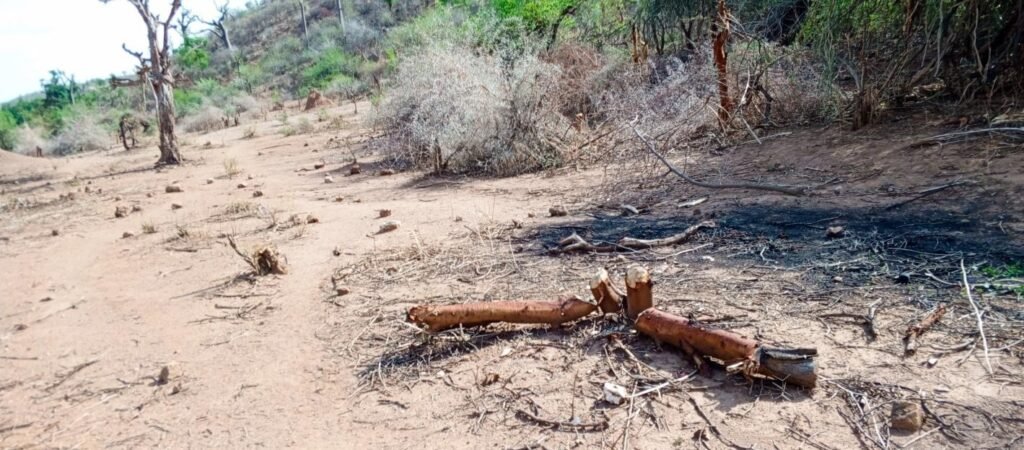
Habitat destruction in Kafta Sheraro National Park around Northwestern Tigray, Tahtay Adiyabo district, May Kuhli Tabya